Collections automation, customer tracking, and cash forecasting for finance teams operating at enterprise scale.
Collections Automation + Forecasting

Enterprise collections automation with live forecast visibility.

Ledgewave gives finance teams one operating layer for receivables intake, account prioritization, dunning workflow, and cash forecasting.

Built for export-driven ERP workflows today, with room for CRM sync, reporting feeds, and API integrations as the operating model matures.

ERP exports + API-ready intake Collector work queues and dunning stages
1 shared receivables command layer

Current receivables, planned billing, collector activity, and forecast assumptions stay attached to the same operating record.

4 connected workspaces

Portfolio command, account detail, dunning workflow, and cash forecast review move as one operating loop.

CRM ready for real customer context

Bring owner, promise-to-pay, dispute, and escalation context closer to collections without rebuilding the story every week.

AR directors Collections managers Controllers Shared services teams Finance operations Revenue operations partners
Enterprise Fit

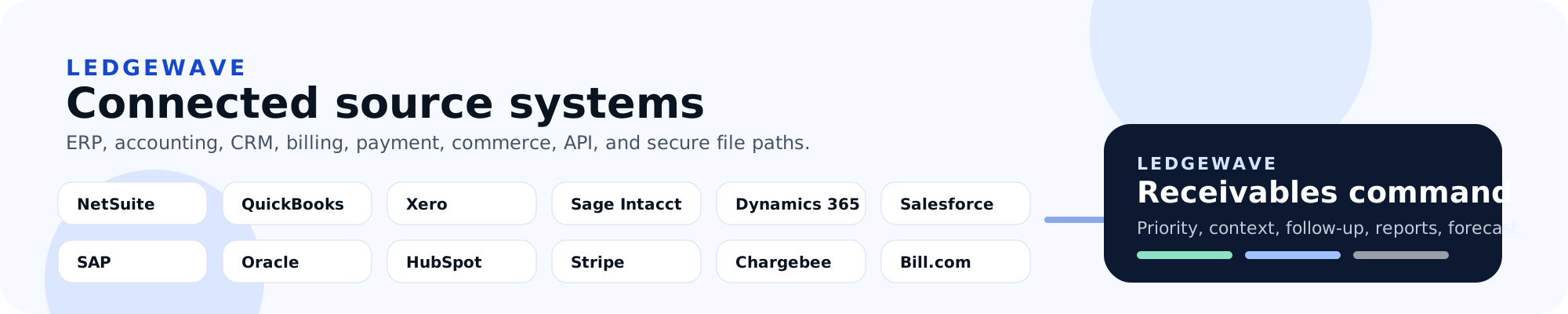
Designed to work with the systems finance already runs.

Start with exported receivables data if needed. Expand into CRM context, payment signals, and reporting feeds when the team is ready for deeper automation.

NetSuite SAP Microsoft Dynamics Sage Intacct Oracle Salesforce HubSpot CSV / SFTP API / Webhooks

Meet teams where they are today

Many finance teams still run collections from ERP exports, spreadsheet trackers, inbox threads, and manual forecast recaps. Ledgewave gives them a more disciplined operating layer without forcing a rip-and-replace on day one.

Grow into a more connected architecture

Once the operating motion is defined, CRM sync, account ownership, dispute routing, payment events, and BI outputs can attach to the same receivables spine instead of creating another side process.

Why Teams Buy

Replace the hidden work around collections, not just the dashboard.

Finance teams move when the product clearly improves how the book gets worked, how exceptions get managed, and how cash timing gets explained.

Portfolio command

Prioritize the book from one live operating view instead of rebuilding aging analysis every cycle.

Dunning orchestration

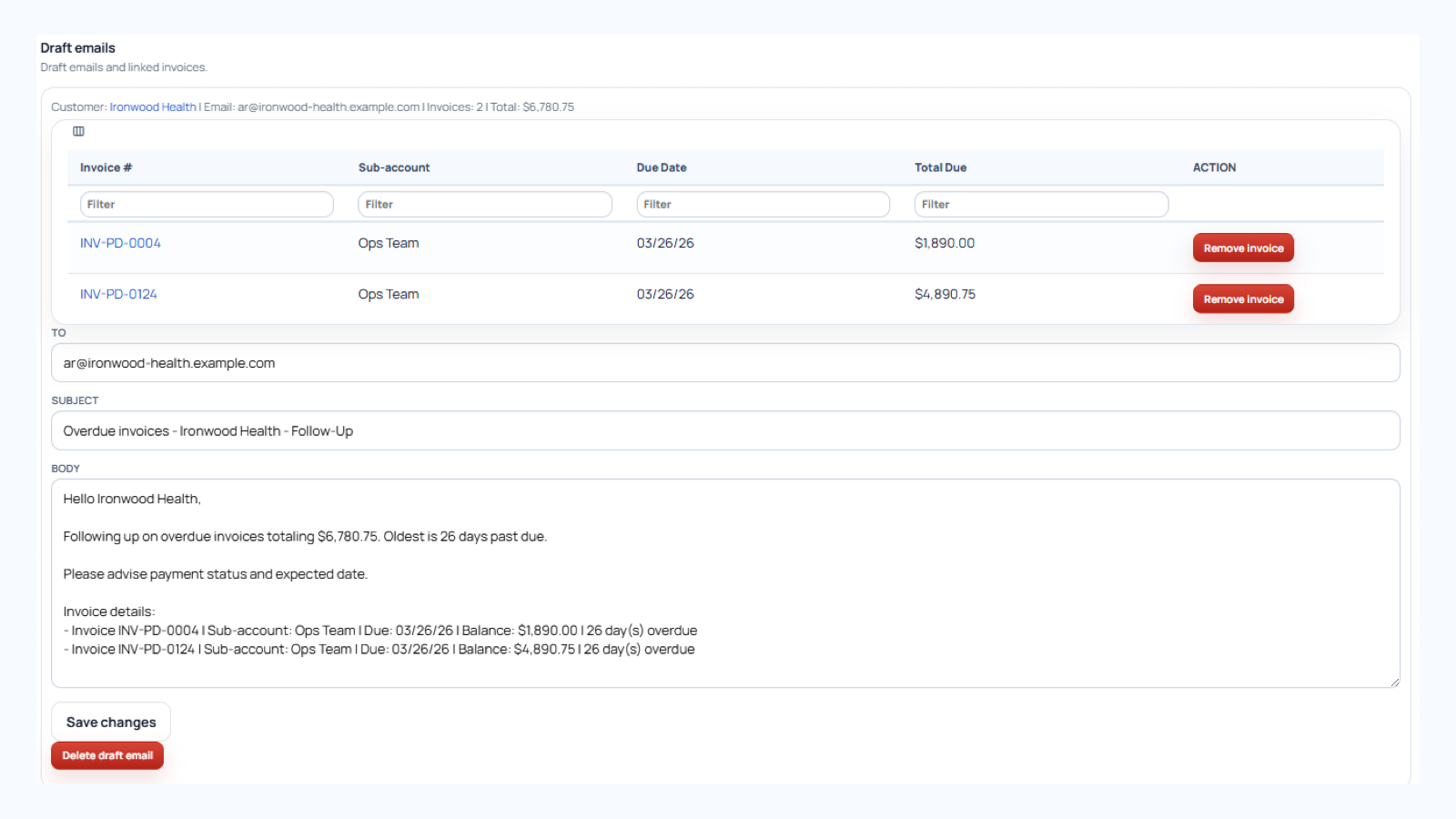
Move from risk signal into collector work queues, account context, and next-touch workflow without losing momentum.

Customer timeline

Keep promises to pay, disputes, notes, escalations, and collector actions tied to the receivable they are meant to support.

Forecast intelligence

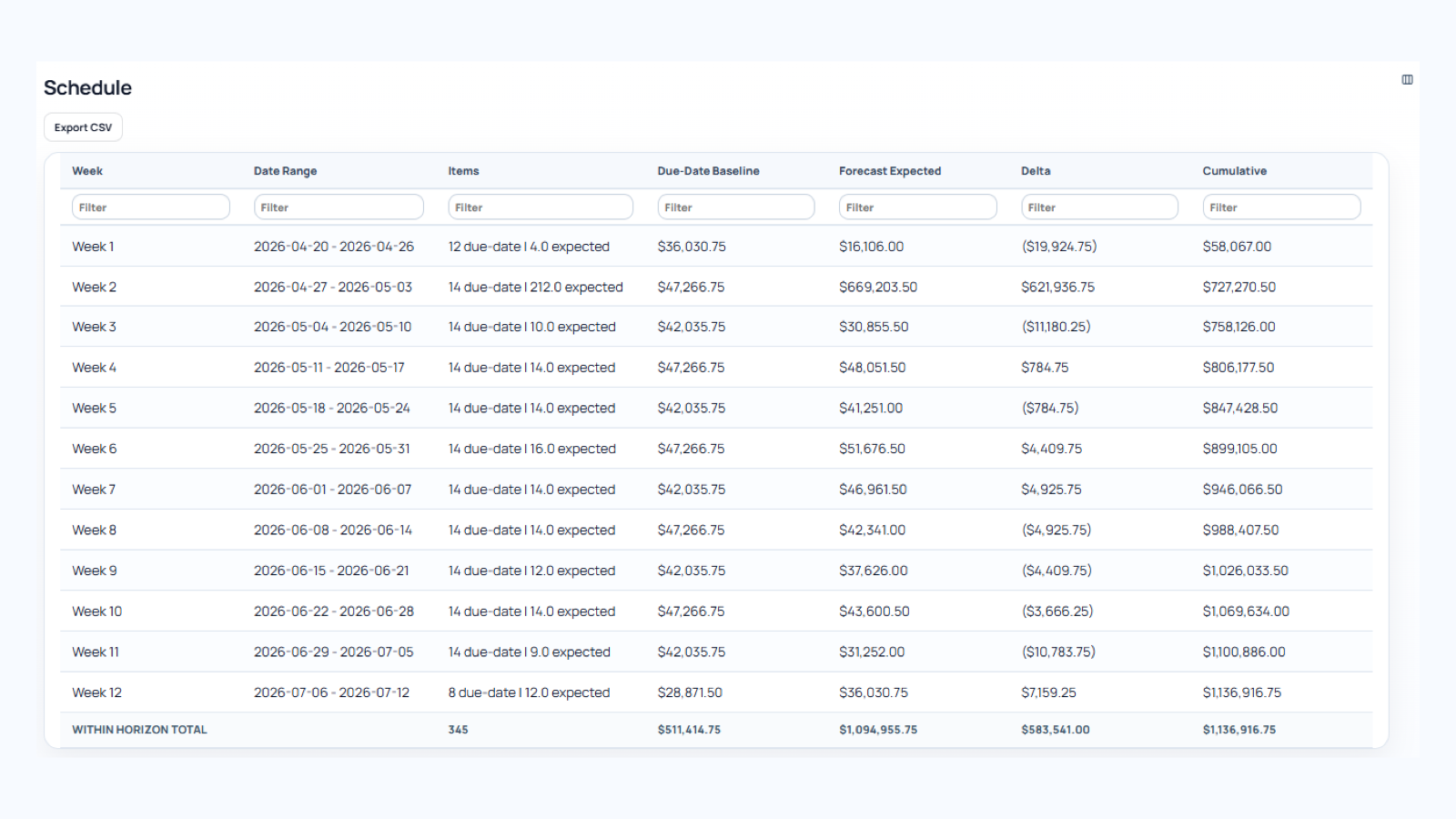
Bring live A/R, payment behavior, planned billing, and workflow context into the same cash review.

Manager visibility

See queue coverage, exception aging, and collector ownership before leadership asks where the process is breaking down.

Audit-ready history

Track what changed, what was sent, what moved in forecast, and why, without rebuilding the trail later.

Spreadsheet Exit

What enterprise teams are trying to leave behind.

The buying trigger is rarely one overdue number. It is the amount of process debt the team is carrying around the receivables workflow.

Before Ledgewave
  • Each export starts a new cleanup cycle before collectors can even begin working the portfolio.
  • Notes, promises to pay, escalations, and customer ownership drift across spreadsheets, inboxes, and CRM comments.
  • Forecast review becomes a separate recap project instead of the natural output of the workflow.
  • Managers can see balances, but not always queue coverage, exception ownership, or what changed this week.
With Ledgewave
  • Receivables intake lands in a shared operating model with validation, staging, and account context already in frame.
  • Collectors move from portfolio signal to account detail to dunning action while keeping history, notes, and ownership visible.
  • Controllers and finance leaders can explain timing changes with the supporting workflow context attached.
  • Operations gains a system that can eventually connect ERP data, CRM context, reporting, and automation rather than multiplying tools.
Workflow

Organized around the real weekly operating cadence.

Ledgewave is valuable because it keeps collections execution, customer context, and forecast review connected all the way through the cycle.

01

Load the portfolio

Bring current receivables and planned billing into one validated operating picture.

02

Prioritize the queue

See aging pressure, account risk, collector ownership, and exception load without extra reporting work.

03

Run the customer motion

Advance dunning, capture notes, track promises, and route disputes with the receivable still in context.

04

Explain the cash story

Walk into forecast and leadership review with timing assumptions grounded in real workflow activity.

Governance + Integration

Credible to operators, controllers, and technical evaluators.

The site needs to tell two stories at once: this product will make the collections motion cleaner, and it will fit inside a serious enterprise environment.

Integration Architecture

One receivables spine connecting systems and workflow.

Inputs
  • ERP receivables exports
  • Planned billing feeds
  • CRM ownership and notes
  • Payment and dispute events
Ledgewave
Outputs
  • Collector work queues
  • Dunning activity and audit trail
  • Leadership-ready forecast views
  • Reporting and downstream exports

Begin file-based if necessary. Expand toward APIs, webhooks, CRM sync, and deeper workflow automation when the process is proven.

Role-based review

Separate file intake, operator action, and management oversight so the team can scale without losing control.

Audit history

Keep imports, notes, stage changes, and forecast adjustments inspectable instead of trapped in a spreadsheet version chain.

CRM-aware rollout

Design for the reality that customer ownership, escalation context, and promises to pay often need to flow across systems.

Implementation

Built for a serious rollout without turning into a giant transformation project.

Teams want confidence that the product can start practical and expand over time as workflow, systems, and governance mature.

1

Map the data model

Confirm the receivables export, planned billing feed, account keys, and workflow fields needed to run the first pilot.

2

Configure queues and stages

Define collector priorities, dunning motions, exception paths, and management views around the current operating rhythm.

3

Run the pilot

Pressure-test intake, queue coverage, customer context, and forecast visibility with the team carrying the book.

4

Expand the system

Add integration depth, management controls, and reporting outputs once the weekly collections motion is stable.

Continue Exploring

Open the parts of the site that answer the next team question.

Each page below pushes deeper into product detail, operating fit, rollout thinking, and the workflows finance teams usually want to evaluate next.

Next Step

Walk through the workflow your team actually runs today.

A strong first meeting should validate data readiness, queue design, customer context, and the cash forecast story, not just click through screens. Use the demo flow to pressure-test whether Ledgewave fits the way your team works.

Workflow fit

See how exports, queues, collector actions, and exceptions connect inside one operating model.

Integration path

Review how ERP, CRM, payment, and reporting signals can fit around the same receivables spine.

Rollout clarity

Leave with a better picture of pilot scope, systems fit, and the next implementation conversation.

What a serious evaluation should cover Designed for finance teams that need product credibility, systems fit, and rollout realism.
Data intake How current receivables, planned billing, and account keys enter the workflow

Start with the files or feeds the team already owns so the conversation stays concrete.

Collector workflow How queues, priorities, customer notes, and dunning stages operate day to day

Validate that the workflow fits the team actually carrying the book, not a generic process map.

Forecast review How timing assumptions, payment behavior, and planned billing shape the cash story

Make sure finance leadership can see the reasoning behind the number, not only the number itself.

Implementation How a pilot could start cleanly and expand into CRM or deeper automation later

Keep the first rollout practical while leaving room for a more connected architecture over time.